S3-to-Tape Archiving

As organizations archive tens of petabytes and beyond, the S3 API has become the standard interface for moving data to tape. But the gateway you choose determines whether your archive stays portable — or becomes a decades-long vendor dependency. Versity’s ScoutAM platform delivers S3-to-tape archiving with hardware-agnostic flexibility, open data formats, and enterprise-grade data management that bundled appliances cannot match.

Simplify Object-Based Tape Archiving via S3

The S3 API has become the universal language of object storage. Presenting a tape archive as an S3 endpoint means any application that speaks S3 can write to tape without modification — no tape-specific knowledge, no custom integrations. This opens tape to AI training datasets, scientific archives, media preservation, regulatory retention, cloud repatriation, and more.

As organizations archive tens of petabytes and beyond, the gateway you choose determines whether your archive stays portable or becomes a decades-long vendor dependency. Versity’s ScoutAM and S3 Tape Archive Engine take a vendor-agnostic approach that makes this workflow simple, scalable, allowing you to manage object-based workflows across any LTO library from any manufacturer.

Solving the Core Challenges of S3-to-Tape Archiving

Vendor Lock-In from Bundled Gateways

Most S3-to-tape gateways are sold by the same vendors that make the tape libraries (e.g., IBM Deep Archive, Spectra BlackPearl, & Quantum ActiveScale Cold Storage). Each stores data in a proprietary catalog that only the vendor’s software can read. ScoutAM writes data in open formats with a perpetual free read license, ensuring your data remains yours.

Scaling Beyond a Single Rack

Bundled gateways enforce a one-to-one relationship between a gateway instance and a tape library. Adding capacity means deploying an entirely new appliance with its own catalog and control plane. ScoutAM uses a one-to-many architecture: a single instance manages multiple tape libraries from multiple vendors across racks and sites.

Throughput Ceilings on Large Workloads

Object gateways often limit large files to single-stream writes, capping throughput at one or a few tape drives. ScoutAM’s parallel data engine splits large files into streaming segments across multiple drives simultaneously, delivering 20–50 GB/s aggregate throughput for high-bandwidth ingest and retrieval.

Managing Data Across Decades

Tape archives are 10–30 year commitments. If your gateway locks data to a specific library brand, every refresh becomes a forced repurchase from the same vendor with no pricing leverage. ScoutAM decouples the software from the hardware. You can swap libraries, mix vendors, and maintain competitive leverage at every refresh cycle.

Key Benefits

Works with Any LTO Tape Library

ScoutAM is hardware-agnostic. It manages IBM Diamondback, Spectra Cube, Quantum Scalar i7 RAPTOR, BDT Orion, and any other LTO library interchangeably, even simultaneously from a single instance. Buy the best hardware for your requirements today and retain the freedom to change vendors at the next refresh cycle. Your tape hardware decision stays independent from your archive software decision.

Open Data Formats and Perpetual Read License

Data written by ScoutAM can be read back without ScoutAM. Versity provides a perpetual free read license, meaning your organization retains full access to archived data even if you stop using Versity software entirely. Data includes self-describing metadata on the media, enabling recovery directly from tape without any proprietary software. No other S3-to-tape gateway offers this guarantee.

S3 and File Access in a Single Namespace

ScoutAM or the Versity S3 Tape Archive Engine pairs with the open-source Versity S3 Gateway (Apache 2.0) to deliver both an S3 object interface and a POSIX file interface within the same system. Applications that speak S3 and applications that use NFS, Samba, or direct POSIX access all interact with the same data, the same namespace, and the same policies — no duplication, no separate workflows.

Policy-Driven Data Management

ScoutAM’s automated policy engine tiers data across disk, tape, and cloud based on age, access frequency, content type, metadata tags, or any combination of criteria. Data moves to the right tier at the right time without manual intervention — and without being limited to the single-destination model of bundled gateway appliances.

Multi-Copy Protection and Geo-Replication

Create multiple copies of archived data to different destinations simultaneously (e.g., tape at Site A, tape at Site B, object storage in a private cloud) all governed by a single policy. Metadata replicates separately, enabling read-only access at secondary sites with automatic failover. This is native platform capability, not an external add-on. Bundled gateways typically require external tooling to replicate across destinations — if they support it at all.

Can You Read Your Data Without the Vendor’s Software?

This is the question that should be at the center of every S3-to-tape procurement. Most bundled gateway appliances store data in proprietary catalogs that only the vendor’s software can interpret. The tapes may use standard LTO cartridges and the interface may be standard S3, but the logical mapping of which object is on which tape exists only inside the vendor’s system. This means that every future hardware refresh, capacity expansion, and support renewal happens on the vendor’s terms, with no competitive alternative.

How S3-to-Tape Archiving Works with ScoutAM

Applications send standard S3 PUTs (or copy files via NFS/POSIX) to ScoutAM. The Versity S3 Gateway translates S3 requests into file operations. Data lands in the high-speed NVMe or flash cache tier for immediate acknowledgment.

ScoutAM’s policy engine evaluates incoming data against configurable rules (e.g., age, size, metadata tags, project classification) and automatically stages data for migration to tape. Small files are bundled into optimized packages for tape write efficiency. Large files are split into parallel streaming segments across multiple drives.

Data is written to one or more tape libraries in open archival format. ScoutAM manages drive scheduling, mount optimization, and media allocation across IBM Diamondback, Spectra Cube, Quantum Scalar, BDT Orion, or any combination of LTO libraries. Multiple copies can be created simultaneously to separate libraries or sites.

When data is needed, applications issue standard S3 GETs or access files through the POSIX mount. ScoutAM automatically stages the requested data from tape back to the cache tier. Parallel retrieval across multiple drives ensures high throughput for large restores.

Policies can direct ScoutAM to maintain copies across tape at multiple sites, on-premises object storage, and cloud storage — all governed centrally. Metadata replicates independently, enabling disaster recovery and read-only access at secondary locations without duplicating the full data management stack.


Zero Data Migration from Legacy HSM

ScoutAM natively reads data written by IBM HPSS, IBM Spectrum Archive (TSM), HPE DMF, and Oracle OHSM. Organizations moving from legacy HSM to S3-to-tape workflows can convert to ScoutAM by importing metadata and cataloging existing media — no brute-force data migration project required.

Parallel Throughput for Large-Scale Ingest and Retrieval

ScoutAM’s data parallelism engine groups small files into optimized packages for efficient tape writes and splits large files into streaming segments across multiple drives simultaneously. Aggregate throughput of 20–50 GB/s across parallel tape drives enables petabyte-scale ingests and restores that single-stream gateways cannot match.


Hear From Peers How Versity’s ScoutAM Makes a Difference

Exascale Archive for the World’s Largest Academic Supercomputer

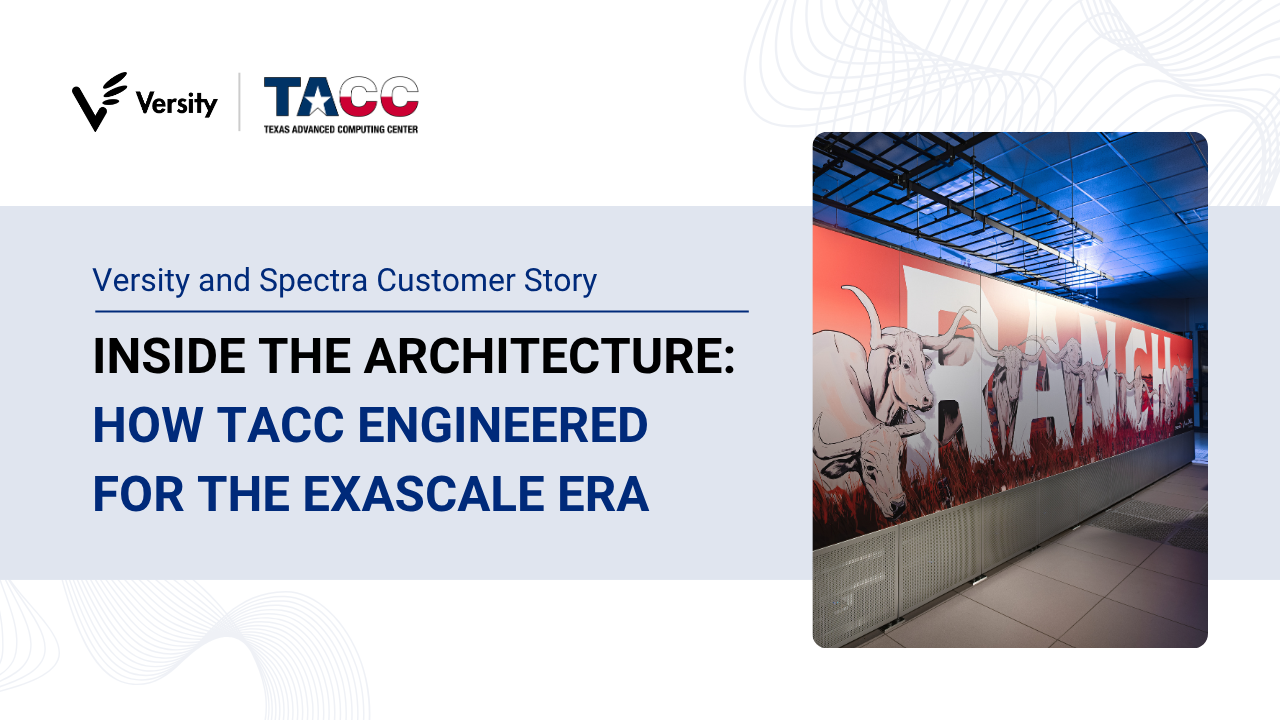
The Texas Advanced Computing Center (TACC), one of the world’s leading academic supercomputing facilities, needed an archive platform capable of supporting Horizon, one of the largest academic supercomputers for open scientific research. With data volumes projected to reach one exabyte, TACC required a storage architecture that could scale without the complexity and cost of traditional multi-tier disk-based systems. TACC selected Versity’s ScoutAM to power Ranch, its new exascale archive, adopting a two-tier flash-to-tape architecture that eliminated mid-tier disk entirely in favor of a faster, more cost-efficient approach. ScoutAM’s open, vendor-agnostic design gave TACC the flexibility to pair best-of-breed tape hardware with software that isn’t locked to any single library manufacturer, ensuring the archive will survive multiple hardware generations across its multi-decade lifespan while keeping pricing leverage at every refresh cycle.

Seamless S3 Data Ingest for Massive Archive

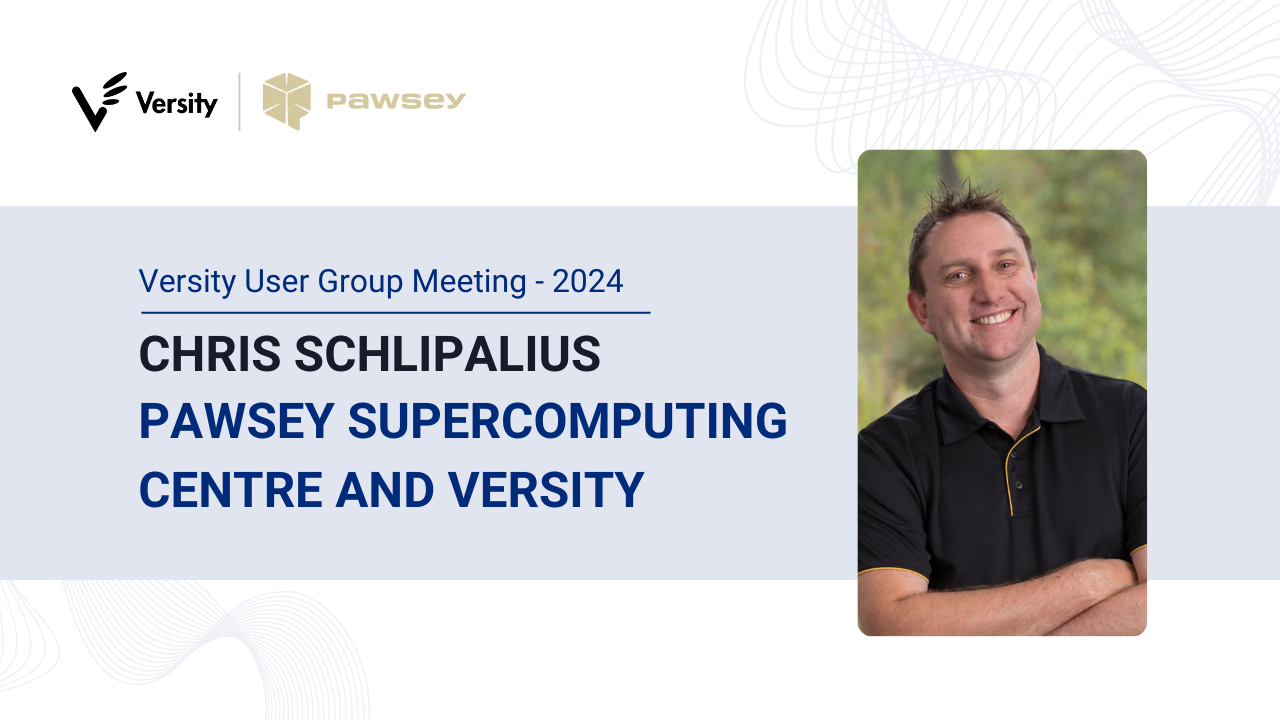
Previously, PAWSEY Supercomputing Centre, one of Australia’s leading HPC facilities, struggled with a solution that couldn’t handle S3 data ingestion, limiting their ability to effectively use object storage in front of their massive archive. Faced with an ever-growing data repository, PAWSEY chose Versity’s ScoutAM to manage both existing and new data, seamlessly integrating object storage into their workflows. Thanks to ScoutAM’s zero data migration feature, PAWSEY was able to quickly convert their existing archive without the need for a time-consuming and costly data migration. ScoutAM’s automatic and transparent data management features eliminated the need for extensive training, fitting effortlessly into PAWSEY’s operations. This strategic move not only reduced administrative overhead and operational costs but also empowered PAWSEY to focus more on driving scientific research and innovation.

Where S3-to-Tape Archiving Applies

Cloud repatriation.

Organizations moving data out of public cloud cold storage (S3 Glacier, Azure Archive) to on-premises tape need an S3-compatible endpoint locally. The same application workflows continue without modification. The goal is to eliminate cloud lock-in— not replace it with appliance lock-in.

Legacy HSM modernization.

Organizations running IBM HPSS, IBM Spectrum Archive (TSM), HPE DMF, or Quantum StorNext can migrate to S3-to-tape workflows without a full data extraction. ScoutAM reads legacy formats natively, enabling a zero-migration conversion.

Ready to Optimize Your Archive Strategy?

Connect with Versity today to find out how we can tailor an S3-to-tape archive solution to keep your organization’s data safe, accessible, and vendor-independent as you scale.